Hot-Dip Galvanizing vs. Painted Steel Grating: Which Lasts Longer?
A comprehensive comparison of two primary corrosion protection methods for steel grating — covering performance, cost, and ideal environments.

When specifying steel grating for industrial applications, one of the most common questions is: should we galvanize or paint? The answer depends on the environment, maintenance budget, and design life required.
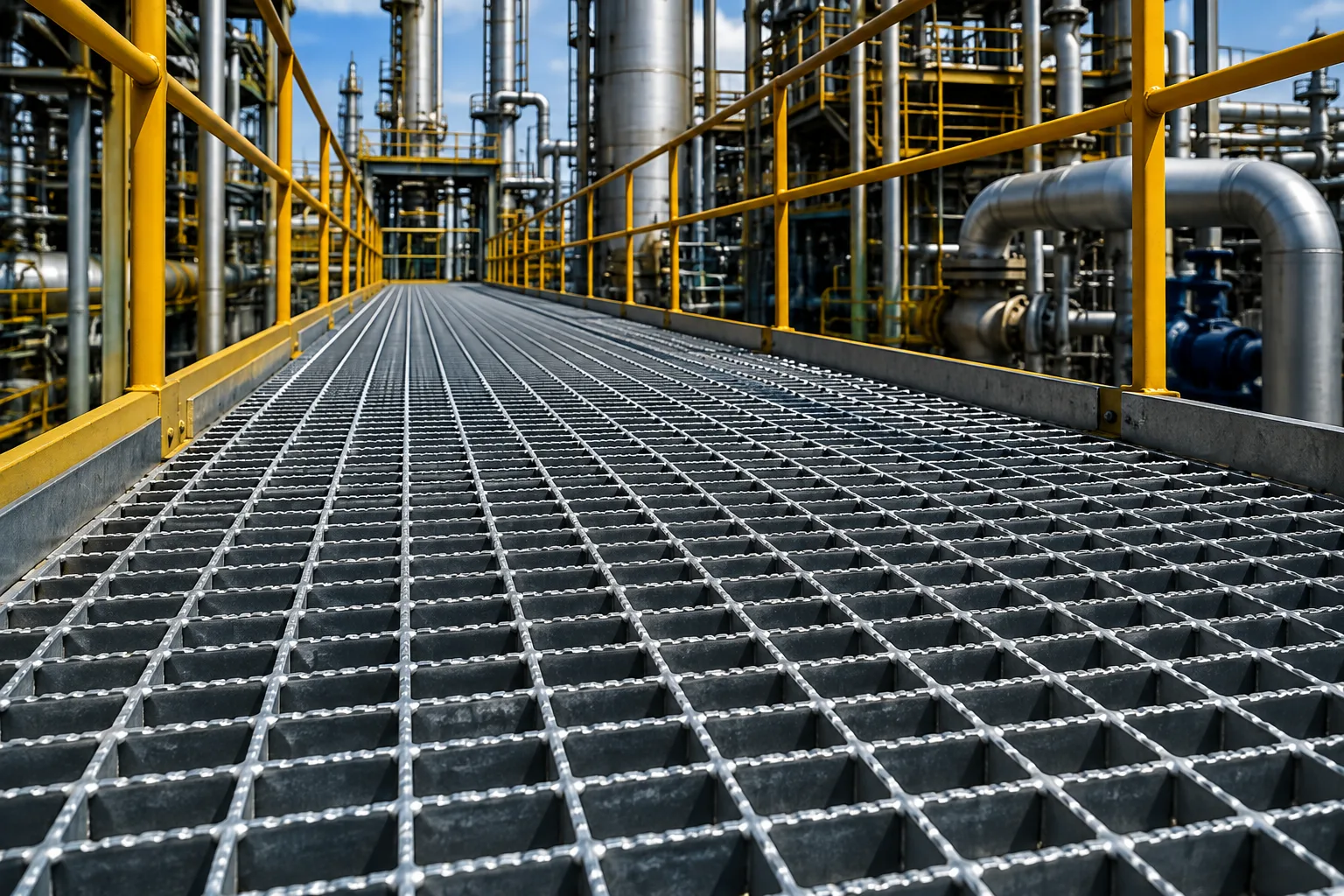
Hot dip galvanized grating generally lasts longer between maintenance than painted steel grating, especially in offshore, coastal and chemical environments. Painted steel grating suits colour-critical or indoor architectural uses where appearance matters more than maintenance-free service. This guide compares hot dip galvanized steel grating and painted steel grating so you can match the finish to your site.
What is Hot-Dip Galvanizing?
Hot-dip galvanizing (HDG) is the process of immersing cleaned steel in a bath of molten zinc at approximately 450°C. The result is a metallurgically bonded zinc coating that protects by two mechanisms: the zinc acts as a barrier and as a sacrificial anode, protecting exposed steel at cut edges and damage points.
Hot dip galvanized grating is made by galvanizing the finished panel, so the zinc coats every bar and intersection. AMMS Global works to ASTM A123 and BS EN ISO 1461 and galvanizes on its in-house lines. This finish is available on Welded Bar Grating and the wider Bar Grating range. For more on why buyers choose it, read the benefits of galvanised steel grating.
What are Painted Coatings?
Painted systems typically involve abrasive blasting to Sa 2.5, followed by a zinc-rich primer, epoxy mid-coat, and polyurethane topcoat. A well-applied system in a moderate environment can last 15–25 years before maintenance painting is required.
Painted steel grating protects the steel with a coating barrier only. If the paint is chipped, scratched or cut, the exposed steel needs touch-up to prevent rust. Painted finishes can be matched to any colour, which suits colour-coded walkways and visible architectural areas, such as the grating in press-locked steel grating for architectural applications.
Comparison Table
| Factor | Hot dip galvanized grating | Painted steel grating |
|---|---|---|
| Protection | Zinc barrier plus sacrificial protection at cut edges and damage points | Coating barrier only |
| Maintenance | Low | Repainting at intervals |
| Damage and cut edges | Zinc protects small damage, large cut faces should be touched up | Touch-up needed wherever the coating is broken |
| Appearance | Metallic grey | Any colour |
| Best for | Offshore, coastal, chemical and outdoor use | Indoor, architectural and colour-critical areas |
In aggressive environments such as offshore platforms, chemical plants, and coastal locations, hot-dip galvanizing consistently outperforms organic coatings in long-term cost of ownership. However, for architectural applications where colour is important, painted systems offer superior aesthetic flexibility.
Cost Over the Whole Service Life
The upfront price of steel grating finishes depends on the coating system and surface preparation, so compare lifetime cost, not just purchase price. Painted steel grating needs recoating cycles that add labour, access and downtime, while hot dip galvanized steel grating needs little maintenance.
How to Choose Between Galvanized and Painted Grating
Start with the environment. For outdoor, marine or chemical exposure, choose hot dip galvanized grating. For indoor areas or where colour is part of the design, painted steel grating can work. If corrosion is severe, see corrosion resistant gratings for stainless steel and fiberglass options.Conclusion
For most industrial applications, hot-dip galvanizing offers the best combination of durability, cost-effectiveness, and maintenance-free performance. For architectural or colour-critical applications, a premium paint system may be appropriate.
Need hot dip galvanized or painted steel grating? Send your load, span and environment details to AMMS Global for a quote.