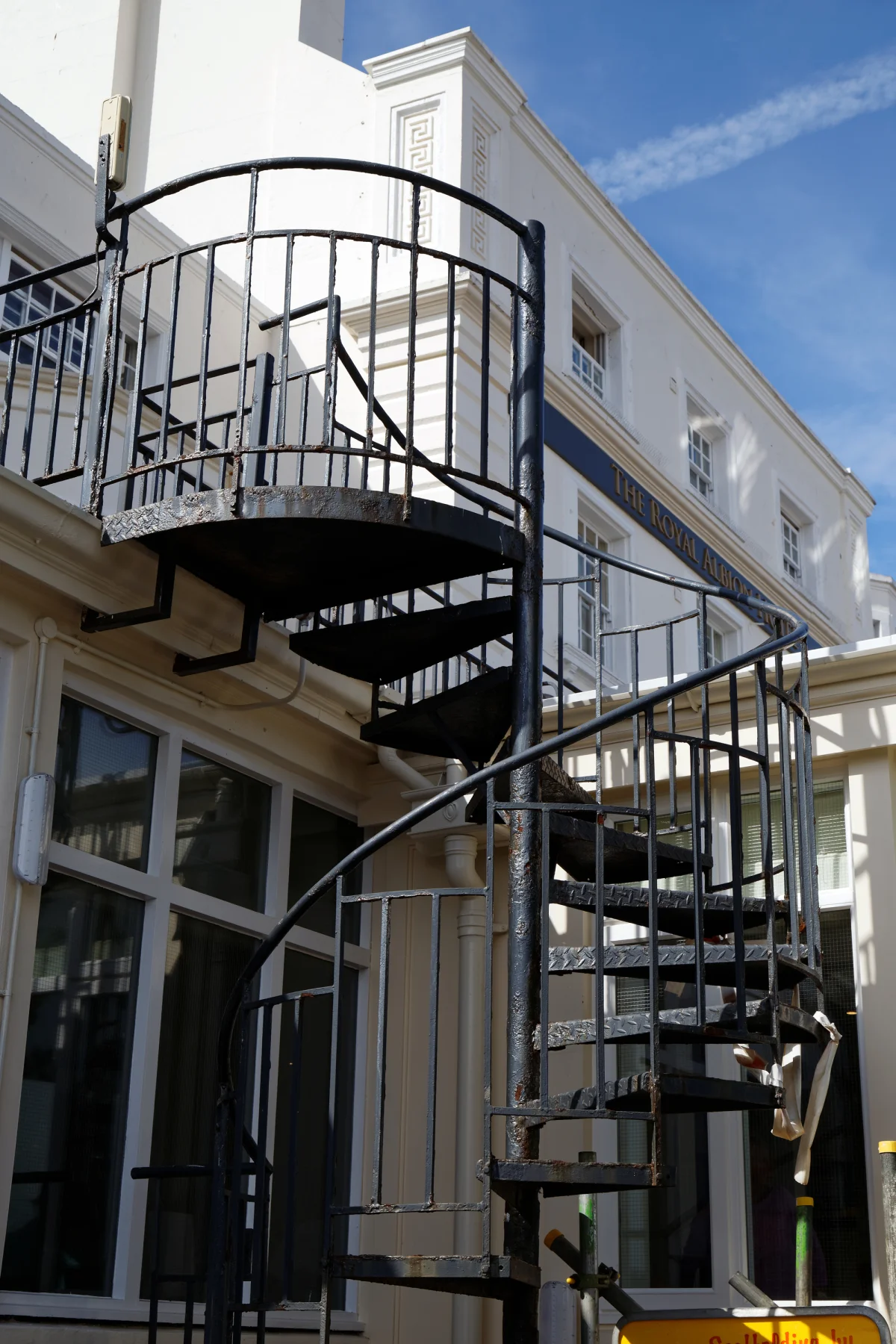
A Grip Strut safety grating tread is a pre-fabricated, one-piece stair tread made from perforated metal plank with a heavily serrated diamond-pattern surface. It provides slip resistance in industrial stairways, access platforms, and walkways where mud, ice, snow, grease, or oil create hazards. The raised anti-slip surface works in multiple directions, and diamond openings allow fluids and debris to drain rather than pool.
What the Tread Actually Does
The metal sheet is punched with diamond-shaped holes, then passed through a forming die that raises the edges around each opening. Those raised, serrated edges bite into footwear, giving traction a flat plate or smooth bar surface cannot match. Openings run through the full thickness, so water, oil, mud, and small debris fall through, keeping the contact surface cleaner and reducing slip chance.
The tread is typically fabricated from the same Grip Strut plank used in walkways, with a bent or welded nosing at the leading edge. The nosing gives the tread its stair-step profile and a defined front edge that improves visibility and foot placement.
Key Selection Factors
Plank width, channel height, material, and nosing configuration drive which tread fits a given stair or access system.
Plank width is often described by the number of diamond holes across the channel. Common configurations include 4-3/4 inch widths with 2 diamond holes, 7 inch widths with 3 diamond holes, 9-1/2 inch widths with 4 diamond holes, 11-3/4 inch widths with 5 diamond holes, 14-1/2 inch widths with 6 diamond holes, 17 inch widths with 7 diamond holes, 18-3/4 inch widths with 8 diamond holes, 21-1/2 inch widths with 9 diamond holes, and 24 inch widths with 10 diamond holes. The right width depends on stair stringer spacing and expected foot traffic.
Channel height, sometimes called bending height, typically ranges from 15 mm up to 100 mm depending on the profile. Thicker material and taller channels increase load capacity and span capability. Material thickness commonly runs from 2.0 mm to 3.5 mm, with heavier gauges used where point loads or impact are a concern.
Material Options
Material | Best Suited For | Notes |
Galvanized steel | General industrial use, outdoor exposure | Most common, good corrosion resistance for the cost |
Carbon steel | Dry indoor environments, painted applications | Requires coating for corrosion protection |
Stainless steel | Food processing, chemical exposure, washdown areas | Higher corrosion resistance, easier to sanitize |
Aluminum | Weight-sensitive structures, marine environments | Lighter weight, naturally corrosion resistant |
Galvanized steel is the default choice for most industrial stair treads. Stainless steel and aluminum are specified where corrosion, sanitation, or weight are deciding factors. Material choice affects corrosion life and load rating, so material and gauge should be considered together.
Nosing and Fixing Methods
The nosing is the front edge of the tread. It can be formed by bending the plank itself, or be a separate angle or plate welded to the leading edge. A formed nosing keeps the tread a single continuous piece, eliminating a seam where debris can collect. A welded nosing allows a sharper, more defined edge and can be fabricated from a different material if needed.
Fixing methods vary by stair structure. Treads are commonly bolted or welded to steel stringers, or fastened with grating clips and saddle hardware. Some installations use a side plate or end plate welded to the tread for bolting into concrete or masonry. The fixing method should match the stair’s structural material and expected vibration or load cycling.
Where These Treads Are Used
Grip Strut safety grating treads appear most often on industrial access stairs, mezzanine stairways, equipment platforms, and catwalks. They are also used on outdoor stairways at processing plants, water treatment facilities, and loading docks where weather exposure is constant. The open diamond pattern performs especially well where snow and ice accumulate, because openings let melting water drain and serrated edges provide bite even before the surface is fully clear.
For facilities that already use Grip Strut Grating for walkways and platforms, matching treads create a consistent walking surface and simplify maintenance. AMMS Global supplies these treads alongside related products such as Bar Grating, Welded Bar Grating, Press-Locked Grating, Aluminium Bar Grating, Stainless Steel Grating, Fiberglass Grating, FRP Molded Grating, FRP Pultruded Grating, Platform Grating, Floor Grating, Expanded Metal, Standard Expanded Metal, Perforated Metal, Stair Treads, and Serrated Safety Grating Tread.
Installation Considerations
One common mistake is ordering a tread that matches the plank width but not the actual stair opening. The tread must account for stringer spacing, any side closure plates, and the overhang at the nosing. A tread that is too narrow leaves a gap at the sides; one that is too wide may not seat properly on the stringer.
Another point to check is the direction of the serrations. The raised edges should run across the walking direction so foot pressure engages the serrations. Installing a tread rotated 90 degrees from the intended orientation reduces traction noticeably.
Load requirements should be confirmed before specifying material and gauge. A tread that works for light personnel traffic may not be adequate for stairs that carry tools, equipment, or occasional cart traffic. The span between stringers, the channel height, and the material thickness all contribute to the load rating.
What to Specify When Ordering
A complete tread specification includes the material, thickness, plank width and diamond count, channel height, nosing type, overall tread depth and width, and the fixing method. For replacement treads, taking field measurements of the existing stair opening and matching the original nosing profile avoids fit problems. For new construction, the stair fabricator should confirm stringer spacing and load requirements before treads are ordered.
The right tread is the one that matches the stair’s actual dimensions, handles the expected loads, and resists the specific environmental conditions of the installation. Getting those three factors right matters more than any single product feature.
What is the difference between Grip Strut tread and standard bar grating tread?
Grip Strut tread is made from a single sheet of metal with raised diamond-shaped serrations around punched openings. Bar grating tread is assembled from load-bearing bars and cross rods. Grip Strut provides multi-directional slip resistance and a smoother walking surface, while bar grating offers higher open area and different load characteristics.
Can Grip Strut treads be cut to size on site?
Cutting on site is possible with appropriate metal-cutting tools, but it affects the galvanized edge protection and may leave sharp edges. Factory fabrication to the required dimensions is preferred, especially for stainless or aluminum treads where edge finish matters.
What nosing options are available?
Common options include a formed nosing from the same plank, a welded flat bar nosing, and a welded angle nosing. The choice depends on the stair profile, visibility requirements, and whether the tread must match an existing installation.
Are these treads suitable for outdoor use?
Yes, galvanized steel and aluminum treads are commonly used outdoors. The open diamond pattern drains water and reduces ice buildup compared to solid plate treads. Stainless steel is specified where de-icing chemicals or coastal exposure are factors.