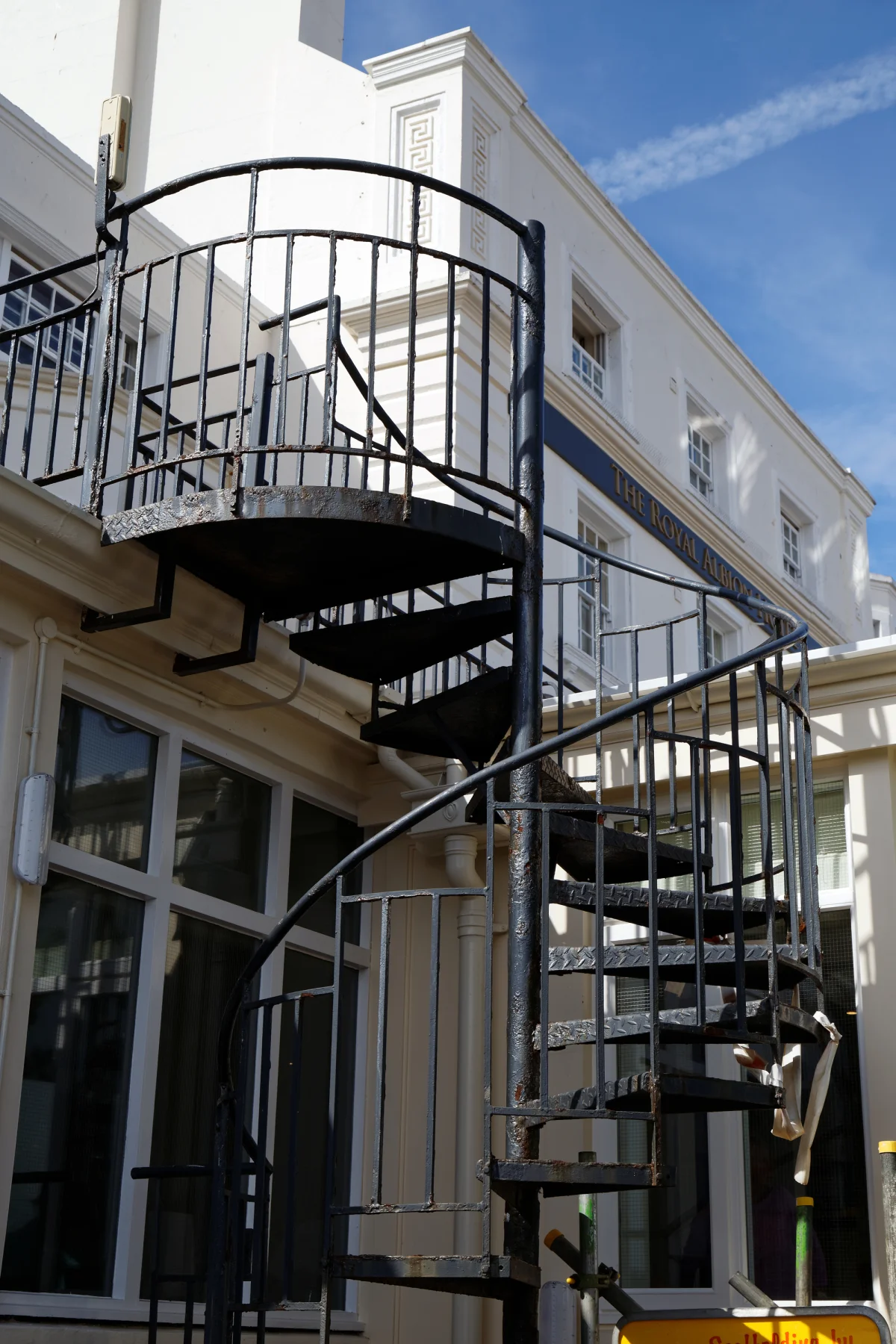
A serrated safety stair tread is a load-bearing tread with a notched, tooth-like walking surface engineered to grip footwear in wet, oily, or debris-covered conditions. It is typically fabricated from metal or fiberglass and installed on industrial stairs, access platforms, and equipment where standard treads become dangerously slick. The serration pattern is not decorative; it creates dozens of small leading edges that bite into boot soles and channel liquids away from the contact point.
The right tread depends on four interacting variables: serration profile, base material, load rating of the supporting structure, and fixing method. A tread that works on an indoor mezzanine may be wrong for a coastal wastewater plant, and the reasons are rarely obvious on a product data sheet.
What the Serration Actually Does
Serrated treads are produced by pressing, punching, or casting a repeating tooth pattern into the walking surface. Teeth are directional in many designs, gripping more aggressively in one direction. Installers must confirm orientation before fixing, because a reversed tread still looks correct but performs poorly on descent.
The open tooth pattern allows water, oil, mud, and snow to drain through or off the walking plane. That is the key difference between a serrated tread and grip tape or coated treads: serrations remove the contaminant, while coatings try to maintain friction through it. In heavy grease environments, a coated smooth tread can hydroplane underfoot; a serrated tread cannot.
Material and Finish Options
The base material determines corrosion resistance, weight, and how the serration is formed.
Material | Serration Type | Best Suited For | Main Trade-Off |
Carbon steel | Punched or pressed teeth | Dry industrial interiors, mezzanines | Rusts without coating |
Galvanized steel | Punched teeth with zinc coating | Outdoor stairs, washdown areas | Coating can wear at teeth over time |
Stainless steel | Punched or cast teeth | Food plants, chemical processing, marine | Higher material cost, heavier than aluminum |
Aluminum | Extruded or cast serrations | Light access platforms, portable steps | Softer, less suited to heavy impact |
Fiberglass (FRP) | Molded serrated surface | Corrosive environments, electrical areas | Lower stiffness, needs more support |
Cast iron and cast aluminum serrated treads, like the SuperTread stair nosings and treads from Grating Pacific, offer high impact resistance and protect exposed concrete edges that chip and crack under repeated foot traffic and cart wheels. Extruded aluminum carriers with a solid abrasive fill provide a different approach: the serration is replaced or supplemented by embedded grit, which grips well but can wear smooth faster than a true mechanical tooth.
Tread Dimensions and Loading
Serrated safety stair treads are supplied as full treads spanning the entire step width or as nosings capping the leading edge of an existing concrete or steel step. The distinction matters for safety and structural performance.
A full tread carries the entire foot load and transfers it to the stair stringers or side channels. A nosing only protects the edge, where most slips begin, leaving the rest of the step unchanged. Nosings are often the more practical retrofit for concrete stairs, where replacing the entire tread would require demolition.
Load rating is a function of span, material thickness, and serration depth. Deeper serrations improve grip but remove material from the load-bearing cross-section. Manufacturers publish load tables for specific profiles, and the supporting structure must be checked against the tread’s weight plus design live load. A heavy cast tread adds dead load that a light aluminum access stair may not have been designed to carry.
Fixing Methods
Installation conditions determine the fixing approach. Welded attachment is common for permanent steel stairs, but damages galvanized or painted finishes at weld points and makes future replacement more involved. Bolted or screwed fixings allow tread replacement without cutting, which matters in corrosive environments where treads are wear items.
For concrete stairs, cast-in or drilled anchors secure the tread or nosing to the step edge. The concrete edge must be sound; if already spalling, a nosing alone will not restore its integrity. Some installers bed the nosing in compatible grout or adhesive to eliminate voids that trap water and accelerate corrosion.
Common Selection Mistakes
One frequent error is specifying a serrated tread based only on slip-resistance rating without checking whether the serration profile suits the footwear used on site. Fine serrations can clog with mud or ice, while aggressive deep teeth can damage softer soles or catch a boot edge unexpectedly.
Another mistake is mixing metals. An aluminum tread fixed to a carbon steel stair with stainless fasteners creates galvanic corrosion cells in wet conditions. Isolation washers or matching material combinations prevent this.
Buyers also underestimate the maintenance difference between open and closed serration patterns. Open patterns drain well but allow small parts and tools to fall through, a real problem on stairs above production lines. Closed serrated treads, where teeth are pressed into a solid plate, retain debris but contain dropped objects.
Where These Treads Are Used
Serrated safety stair treads appear most often on industrial access stairs, loading docks, truck and equipment access ladders, and mezzanine steps. They are also specified for outdoor fire escapes, wastewater treatment platforms, and marine gangways. In each case, the tread is paired with a compatible landing surface, typically a Grip Strut Safety Grating Tread or a matching platform grating product such as Bar Grating, Welded Bar Grating, Press-Locked Grating, Aluminium Bar Grating, Stainless Steel Grating, Fiberglass Grating, FRP Molded Grating, or FRP Pultruded Grating. The transition from stair to landing is a common slip point, so the nosing and landing surface need to perform together.
For facilities standardizing on a single grating system, AMM Solutions and its AMMS Global product range offer related Stair Treads, Floor Grating, Platform Grating, Expanded Metal, Standard Expanded Metal, Perforated Metal, and Grip Strut Grating options that can be matched to serrated tread profiles. The goal is a consistent walking surface across the entire access route, not just on the stairs.
Practical Buying Checklist
Before specifying a serrated safety stair tread, confirm actual step dimensions, including nosing projection and any existing edge damage. Measure the unsupported span and verify the supporting structure’s load capacity. Identify contaminants present, not just water: oil, grease, mud, ice, and metal shavings all behave differently on a serrated surface. Check the direction of traffic and confirm serration orientation with the manufacturer. Select the fixing method based on whether the tread is permanent or a replaceable wear part. And match the tread material to the stair structure to avoid galvanic incompatibility.
What is the legal depth of a stair tread?
Tread depth requirements vary by building code and occupancy type. In the United States, the International Building Code commonly requires a minimum tread depth of 11 inches for commercial stairs, while the Occupational Safety and Health Administration sets a minimum of 9.5 inches for fixed industrial stairs. Local codes can differ, so verify the applicable standard for the specific project.
What is a bullnose on a stair tread?
A bullnose is the rounded or projecting front edge of a stair tread. On serrated safety treads, the bullnose is often the location of the most aggressive serration or a separate nosing profile, because that edge is the primary point of foot contact and the most common slip location.
What are the riser and tread of a stair?
The riser is the vertical face between two consecutive stair treads, and the tread is the horizontal surface that receives the foot. In a serrated safety stair tread, the tread is the serrated walking plane, while the riser may be open, closed with a plate, or formed by the supporting structure depending on the stair design.