How to Choose Grating in Construction Projects in the US
Choosing grating in construction depends on load, span, environment and finish, with options from bar grating to fiberglass and stainless steel.
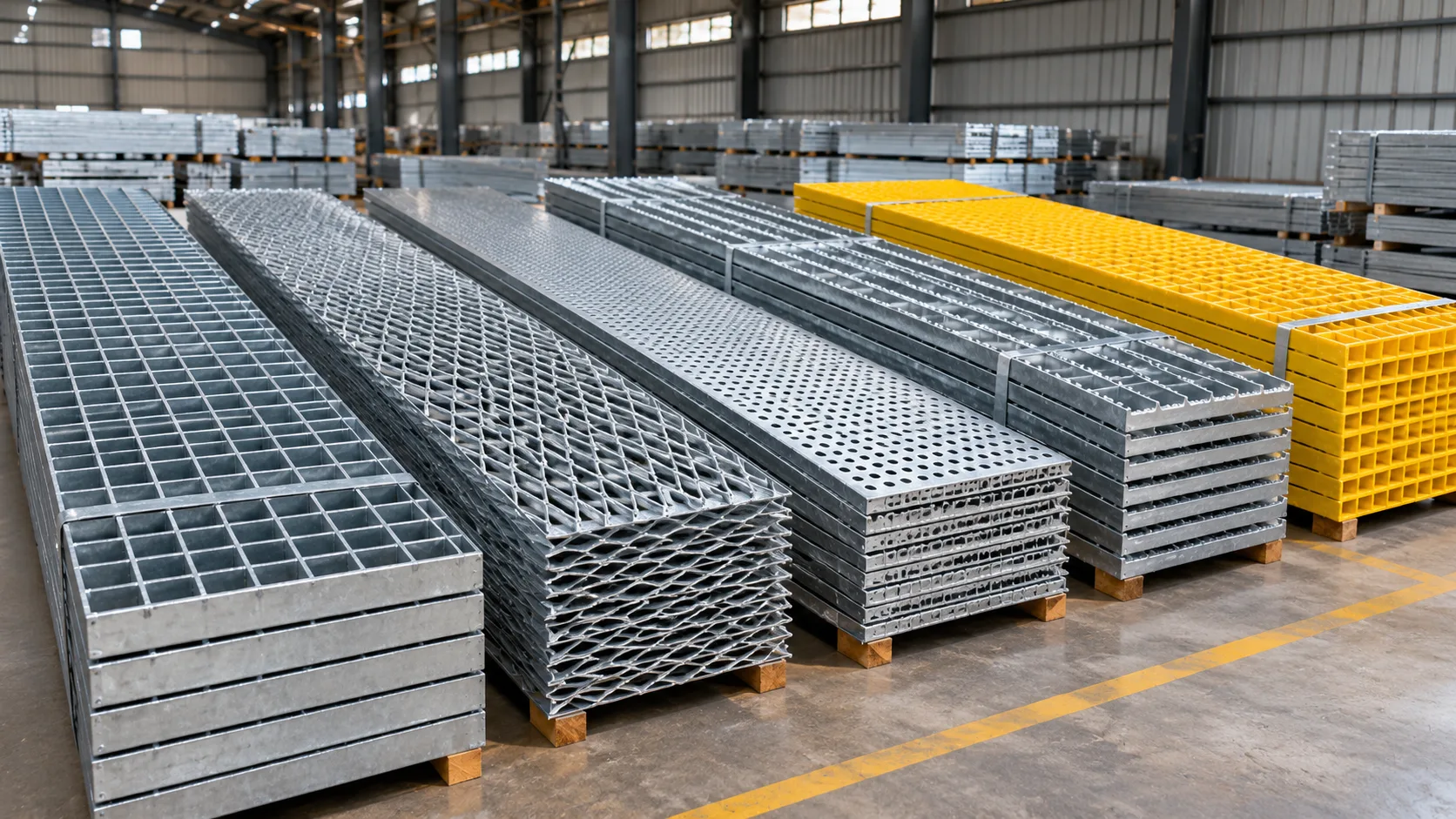
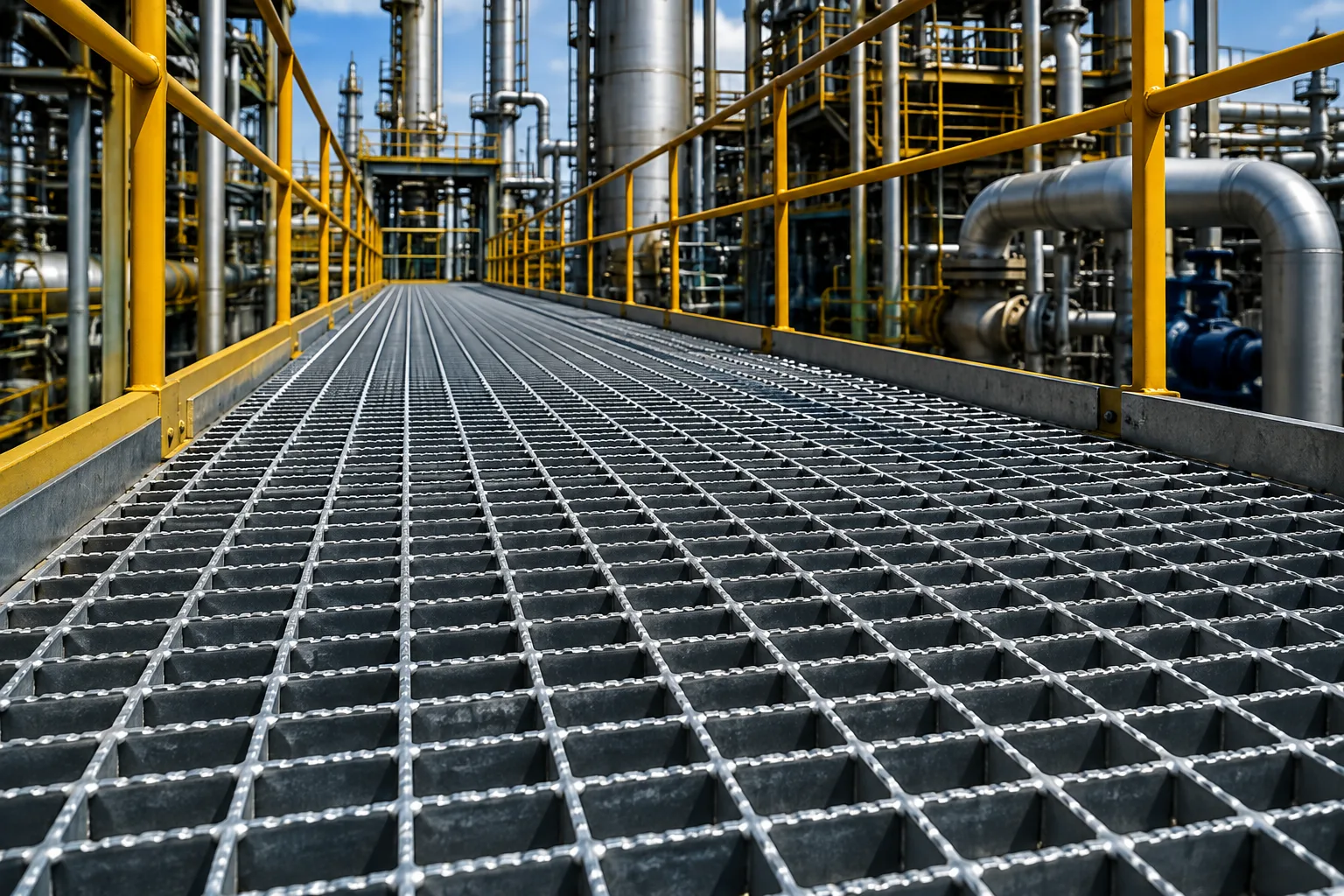
Grating in construction is a grid-like panel of parallel load-bearing bars joined by crossbars, used for flooring, walkways, drainage covers, and platforms. It provides strength and support while allowing light, air, and liquids to pass through. Choosing the right grating comes down to load requirements, environment, slip resistance, and material compatibility. AMMS Solutions supplies fabricated grating products across these categories, but selection starts with understanding how each type behaves on site.
Matching Grating Type to the Job
The first decision is structural form, because that determines load capacity, open area, and manufacturing method.
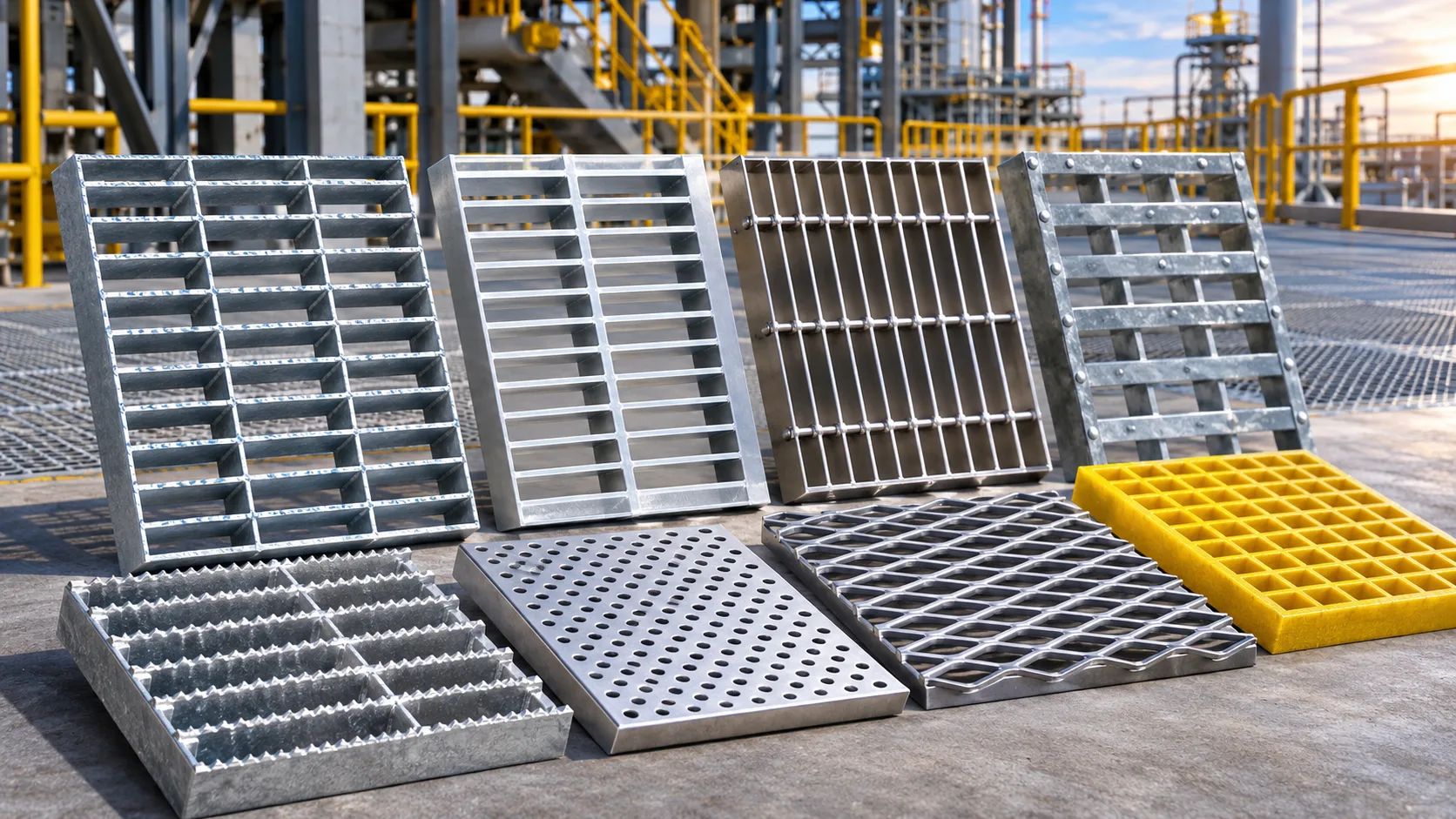
Grating Type | How It Is Made | Best Suited For |
Welded Bar Grating | Bearing bars joined to crossbars at 90 degrees by welding | Heavy-duty industrial flooring, truck docks, mezzanines |
Press-Locked Grating | Crossbars mechanically locked into bearing bars without welding | Architectural walkways, lighter foot traffic, cleaner appearance |
Expanded Metal | Single metal sheet slit and stretched into a diamond pattern | Catwalks, security screens, light-duty platforms |
Grip Strut Grating | Formed sheet with raised perforated treads | Stair treads, ramps, areas needing aggressive slip resistance |
Fiberglass Grating | Molded or pultruded resin and fiberglass | Chemical plants, marine environments, electrical areas |
Welded Bar Grating remains the workhorse for construction grating where spans are longer and loads heavier. The standard 19W4 pattern, with bearing bars spaced 1-3/16 inches apart, is routinely stocked in carbon steel and commonly specified for industrial platforms.
What Is Grating in Construction?
In construction terms, grating is an open-grid panel system that replaces solid plate or decking where drainage, ventilation, visibility, or weight reduction matters. Unlike solid floor plate, grating lets spilled liquids pass through, reduces wind load on elevated structures, and keeps walking surfaces clear of standing water. The open area also means less dead load on supporting steel, which can trim structural framing requirements.
The trade-off is that grating feels different underfoot than solid decking, and small objects can fall through the openings. That is why bar spacing and bearing bar depth are specified carefully rather than chosen by guesswork.
Material Selection and Finish
Carbon steel is the default for most US construction grating. It is strong, readily available, and can be hot-dip galvanized for corrosion protection. Galvanized steel grating is recommended in high-traffic areas or locations exposed to moisture and environmental corrosion. For food plants, chemical facilities, and marine settings, Stainless Steel Grating is the better choice because it resists corrosion without a coating that can wear or chip.
Aluminium Bar Grating offers a lightweight alternative where weight reduction matters, such as rooftop walkways or access platforms on existing structures. Fiberglass Grating is non-conductive and highly corrosion resistant, so it performs well around electrical equipment and in chemical processing areas where metal would degrade.
Finish matters as much as base material. Serrated bearing bars provide anti-slip protection by adding a notched top surface. Non-serrated bars are smoother and easier to clean, which suits food handling areas. Painted finishes are available in a range of colors, but paint wears faster than galvanizing under foot traffic and equipment loads.
Sizing, Load, and Span Considerations
Bearing bar depth and thickness control how far a grating panel can span between supports. Common bearing bar sizes include 1 x 1/8 inch, 1 x 3/16 inch, 1-1/4 x 3/16 inch, and 1-1/2 x 3/16 inch, with standard panel widths of 2 or 3 feet and lengths up to 24 feet. Deeper bars carry heavier loads or span longer distances without intermediate support.
Cut-to-Size Grating Panels should be ordered with the bearing bars running in the load direction. A common mistake is orienting panels so the crossbars carry the load, which dramatically reduces capacity. Banding, or welding a flat bar around the panel perimeter, is often specified when panels are cut to odd shapes or when edges will be exposed to traffic.
Platform, Floor, and Stair Applications
Platform Grating and Floor Grating serve similar purposes but differ in support framing. Platform grating typically sits on a dedicated steel frame with defined spans, while floor grating may be installed over trenches, pits, or larger open areas. Stair Treads are fabricated as separate units with nosing bars and side channels, often using Grip Strut Grating or serrated bar grating for slip resistance.
For drainage areas and trench covers, Expanded Metal and its variants, Standard Expanded Metal and Flattened Expanded Metal, provide a lighter, more economical option. Flattened Expanded Metal is passed through rollers after stretching, producing a smoother surface that is easier to walk on. Perforated Metal offers another alternative where smaller openings or specific hole patterns are required.
Practical Selection Checklist
Before ordering grating for a construction project, confirm these points:
Required span and uniform or point load, which drives bearing bar depth and thickness
Exposure conditions, including moisture, chemicals, and salt air, which drive material and finish
Slip resistance needs, which determine serrated versus non-serrated surfaces
Open area requirements for drainage, airflow, or light transmission
Whether panels need banding, cutouts, or Custom Fabrication for penetrations and odd shapes
Custom Fabrication matters more than many specs suggest. Most sites need panels trimmed around columns, pipe penetrations, or equipment bases, and field cutting galvanized grating exposes bare steel that should be touched up to prevent rust.
Choosing grating in construction is rarely about finding the cheapest panel. It is about matching the grid pattern, material, finish, and fabrication details to the actual site conditions and load path. Getting the span direction right, specifying the correct bearing bar depth, and accounting for corrosion and slip resistance will determine whether the grating performs safely for decades or becomes a maintenance problem within a few years.