Looking for an expanded metal sheet that actually matches your spec sheet? AMMS Global manufactures expanded metal mesh in carbon steel, stainless steel, and aluminum, in both standard and flattened patterns. We cut and expand to your opening size, gauge, and sheet dimensions, then ship worldwide.
If you need expanded metal steel for a walkway or a smooth flattened panel for a fence line, we can quote it fast and build it to spec.
What Is Expanded Metal, Exactly?
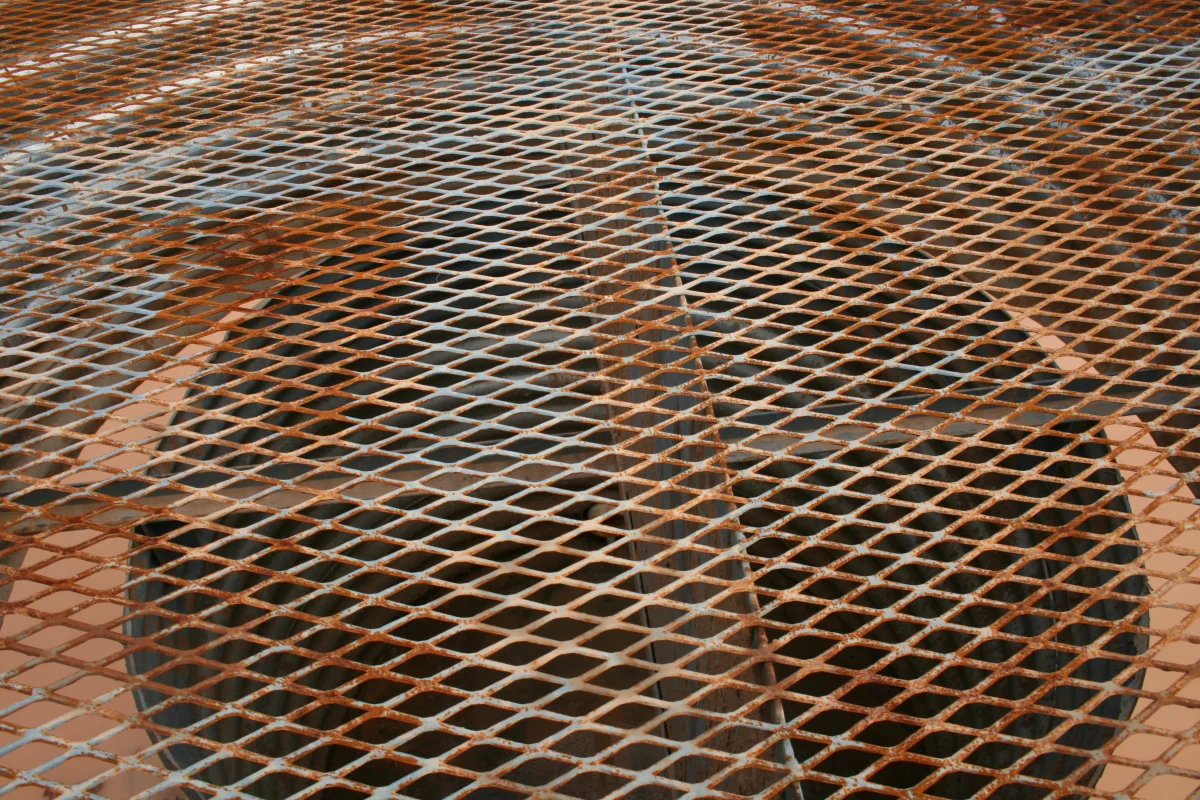
Expanded metal starts as a solid sheet of metal. A machine slits it in a repeating pattern and stretches it open, which forms the familiar diamond mesh. Nothing gets cut away and thrown out, unlike perforated metal where holes are punched and the scrap goes in the bin. That's part of why expanded metal sheet tends to be cheaper per square foot than perforated alternatives.
Because it's one continuous piece of metal instead of woven or welded strands, it doesn't come apart the way wire mesh can. Pull on one part of an expanded metal panel and the whole sheet shares the load. That's the main reason engineers reach for it on anything load-bearing.
Standard vs. Flattened: Which One Do You Need?
We manufacture both, and the right one really depends on what the panel has to do.
Standard expanded metal keeps the diamond strands raised, the way they come off the stretching machine. Those raised edges bite into your boots, which is exactly what you want on a ramp, catwalk, or grating floor. It's not the easiest surface to paint evenly, but nobody's buying grating for looks.
Flattened expanded metal gets run through a roller afterward, which presses the strands down flat on both sides. You lose some of that grip, but you gain a smooth, even surface that welds cleanly and takes paint or powder coat without any trouble. Most fencing, machine guards, and cabinet panels use flattened stock for that reason.
Standard | Flattened | |
Surface | Raised diamond strands | Flat, rolled smooth |
Grip / traction | High | Low, not for walking on |
Typical use | Ramps, catwalks, grating | Fencing, guards, panels |
Paint & weld | Harder to coat evenly | Coats and welds well |
Common gauge | 10 to 3 gauge | 13 to 7 gauge |
Steel, Stainless, or Aluminum?
The mesh pattern is only half the decision. The base metal matters just as much:
Carbon steel is the workhorse. Cheapest option, strong, fine for indoor or dry industrial settings.
Stainless steel costs more but shrugs off rust and chemical exposure, so it's the go-to for food plants, marine sites, or anything left outdoors long term.
Aluminum is light and naturally corrosion-resistant. A lot of architects specify it for facades and decorative screening because it doesn't rust and it's easy to handle.
Galvanized steel splits the difference: carbon steel with a zinc coating, giving you decent corrosion protection without paying stainless prices.
Applications of Expanded Metal Mesh
Security fencing and window guards
Machine guarding on plant floors
Walkways, catwalks, and stair treads
Ventilation grilles and filtration screens
Building facades and architectural screening
Cable trays, shelving, and wire baskets
Why Buy Expanded Metal From AMMS Global
We build expanded metal to order rather than pulling from a fixed catalog, so you're not stuck choosing between two stock sizes:
Custom opening size, gauge, and sheet dimensions to your drawing
Standard and flattened options, in steel, stainless, or aluminum
Bulk runs or cut-to-size sheets, whichever fits the job
Quotes back within 24 hours
We ship internationally, not just locally
Expanded Metal Specifications
Before you buy expanded metal, there are really just three numbers that matter:
Opening size, written as short way by long way, like 1-3/4" x 1"
Gauge, how thick the metal was before it got expanded
Open area percentage, roughly how much of the sheet is open space versus solid metal
Tell us what the panel needs to do and we'll suggest the opening size and gauge that fits. No need to guess.